Best Exercises For A Bloated Stomach And Gas Relief
- By GHBY Team
- 07 Apr 2026
- Verified by Dr Adwoa Agyei-Nkansah
Key takeaways
- You can often relieve bloating with gentle exercise rather than intense workouts.
- Walking after meals consistently helps gas move and reduces fullness.
- Yoga, stretching, and breathing calm the gut and nervous system together.
- Heavy lifting and high-impact exercise often worsen bloating when symptoms are active.
- Persistent or worsening bloating deserves medical evaluation.
Rate Our Article
We'd love to know!
- 0
- 0
- 0
- 0
- Prevalence and Associated Factors of Bloating: Results from the Rome Foundation Global Epidemiology Study - PMC
- The effect of a short-term physical activity after meals on gastrointestinal symptoms in individuals with functional abdominal bloating: a randomized clinical trial - PMC
- Influence of body posture on intestinal transit of gas - PMC
- Exercise for digestion: Yoga, stretching, walking, breathing exercises
- Analysis of the efficacy of abdominal massage on functional constipation: A meta-analysis - PMC
- Meditation and yoga for irritable bowel syndrome: study protocol for a randomised clinical trial (MY-IBS study) | BMJ Open
- Frontiers | Effects of short-chain fatty acid-producing probiotic metabolites on symptom relief and intestinal barrier function in patients with irritable bowel syndrome: a double-blind, randomized controlled trial
- Official journal of the American College of Gastroenterology | ACG
- Editorial: Exercise physiology and gastrointestinal disorders - PMC
- Effect of Lacticaseibacillus rhamnosus IDCC 3201 on irritable bowel syndrome with constipation: a randomized, double-blind, and placebo-controlled trial | Scientific Reports
Related articles
See AllFrequently asked questions
Get the information you need.
When bloated, you usually do best with movement that feels rather kind. Walking, gentle cycling, or slow yoga are best because they encourage gas to move without stressing your abdomen. When you move calmly, you help your gut do its job instead of fighting it.
Yes, exercise very often helps. When you move gently and consistently, you improve gut motility and reduce gas trapping. You are not forcing bloating away, but you are patiently giving your intestines the rhythm they need to empty and relax.
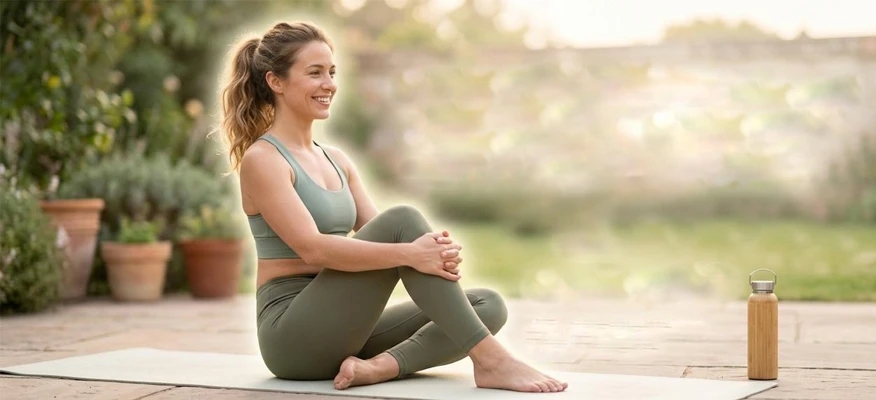
You usually feel the most relief from poses that softly compress and release the abdomen. Knees to chest, Happy Baby, Cat Cow, Child’s Pose, and gentle twists often help you pass gas and feel less pressure. Move slowly and breathe deeply so your nervous system stays calm.
Absolutely. When you walk after eating, you help food and gas move forward instead of lingering. Even ten relaxed minutes can noticeably reduce fullness and discomfort, especially if you stay upright and avoid rushing.
You rarely need long workouts for a bloated stomach. You can often feel better after ten to fifteen minutes of gentle movement. When you are very uncomfortable, even five minutes of walking or stretching can still help.
Yes, it is usually safe when you choose gentle exercise and listen closely to your body. You should avoid pushing through sharp pain or severe nausea. If movement feels soothing rather than punishing, you are probably doing the right thing.
You often feel the most relief when you move shortly after meals, once intense fullness settles. Light walking, five to fifteen minutes after eating, works well. Hard workouts usually feel better later, after digestion has progressed.
Yes, stretching can assist if you do it gently and on purpose. Gentle stretches can help you feel better by relaxing your stomach and helping gas pass through your body. Deep breathing can also assist.
Very much so. When you breathe deeply into your belly, you calm your nervous system and support digestion. Slow breathing often reduces pressure and discomfort, especially when bloating is tied to stress or constipation.
How was the experience with article?
We'd love to know!