9 Foods That Cause Bloating You Should Know About
- By Dr Sylvia Kama-Kieghe
- 07 Apr 2026
- Verified by Dr Adwoa Agyei-Nkansah
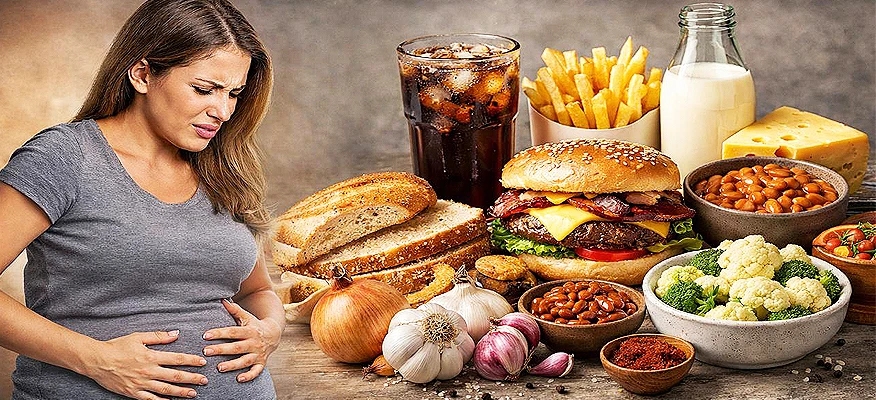
Key takeaways
- Certain foods that cause bloating contain fermentable carbohydrates called FODMAPs.
- Gas, water retention, and gut sensitivity all contribute to a bloated stomach after eating.
- Beans, wheat, dairy, onions, and some fruits are among the worst foods for bloating.
- Low-FODMAP diets reduce symptoms in 50–76% of IBS patients.
- Eating smaller meals, reducing sodium, and reintroducing trigger foods gradually helps.
- Persistent or severe bloating requires medical evaluation.
Rate Our Article
We'd love to know!
- 0
- 0
- 0
- 0
- Delayed gastric emptying and reduced postprandial small bowel water content of equicaloric whole meal bread versus rice meals in healthy subjects: novel MRI insights - PMC
- Frontiers | The low-FODMAP diet and the gluten-free diet in the management of functional abdominal bloating and distension
- Evaluation of Efficacy of Low Fermentable Oligosaccharides, Disaccharides, Monosaccharides, and Polyols (FODMAP) Diet in Management of Irritable Bowel Syndrome (IBS): An Updated Meta-Analysis of RCTs | Journal of Advances in Medicine and Medical Research
- A Low-FODMAP Diet Improves the Global Symptoms and Bowel Habits of Adult IBS Patients: A Systematic Review and Meta-Analysis - PMC
- Fermentable oligosaccharides, disaccharides, monosaccharides and polyols (FODMAPs) and nonallergic food intolerance: FODMAPs or food chemicals? - PMC
- Differential Effects of FODMAPs (Fermentable Oligo-, Di-, Mono-Saccharides and Polyols) on Small and Large Intestinal Contents in Healthy Subjects Shown by MRI - PMC
- Impact of toll-like receptors on food allergy: mechanisms involved and scientific evidence | Journal of Physiology and Biochemistry | Springer Nature Link
- Effects of High-Fiber Diets and Macronutrient Substitution on Bloating: Findings From the OmniHeart Trial - PMC
Related articles
See AllFrequently asked questions
Get the information you need.
Certain foods trigger bloating more strongly than others, especially beans, lentils, wheat products, onions, garlic, dairy, apples, cruciferous vegetables, and carbonated drinks. These foods ferment quickly in your gut or pull water into your intestines. If you’re sensitive, you’ll often feel tight and swollen shortly after eating them.
When specific foods make your stomach bloated, it’s usually because your body doesn’t fully absorb certain carbohydrates. They sit in your gut, draw water in, and then bacteria ferment them into gas. If your gut is already sensitive, you’ll feel that pressure intensely and quickly.
Foods that bloat include legumes, broccoli, cabbage, dairy, wheat, and sugar alcohols like sorbitol. These foods either ferment rapidly or slow digestion down to make you notice more visible distension after eating them.
If you regularly feel bloated, you should cut back on high-FODMAP foods. This includes onions, garlic, wheat, certain fruits, and dairy that has lactose in it. You don't have to stay away from everything forever, but you should carefully add items back into your diet to see how your body reacts.
Vegetables can cause bloating, especially broccoli, cauliflower, cabbage, and Brussels sprouts. They contain raffinose and fiber that ferment in your colon. If you cook them thoroughly and eat smaller portions, you’ll often tolerate them more comfortably.
Fruits can also trigger bloating, particularly apples, pears, and watermelon. They contain fructose or polyols that some people poorly absorb. If you’re sensitive, you’ll feel gassy or swollen after eating larger servings.
Your stomach often bloats after eating because digestion naturally creates gas and shifts fluid. If you eat quickly, overeat, consume fatty foods, or eat fermentable carbs, that sensation becomes stronger. Your gut and brain communicate constantly, so sensitivity amplifies the feeling.
Foods high in salt, refined carbs, and certain FODMAPs can cause both bloating and water retention. Salty meals make your body hold onto fluid, while fermentable carbs increase intestinal water. Together, they leave you feeling bloated after eating.
Eating too much fiber may definitely cause bloating, especially if you increase it rapidly. Your gut bacteria ferment fiber, resulting in gas. If you gradually increase your intake and drink plenty of water, your body will normally adjust more readily.
How was the experience with article?
We'd love to know!