Types Of Pain: Understanding What Each Pain Mean
- By Dr. Stefanenko Irina Borisovna
- 30 Mar 2026
- Verified by Dr. Pramod Mane
Key takeaways
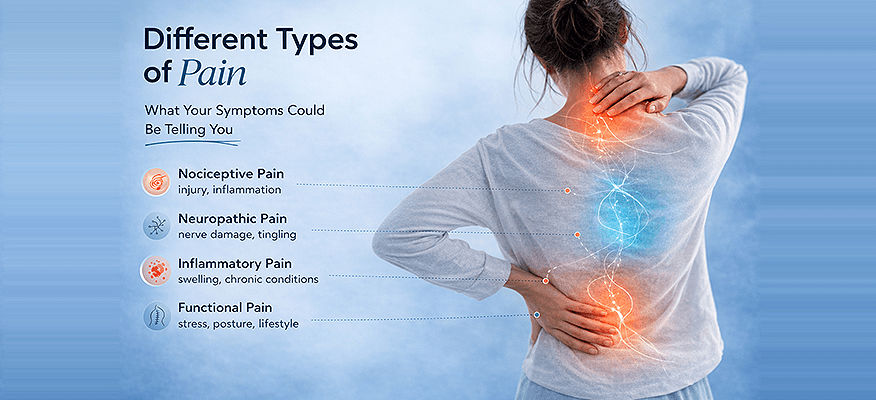
- Pain may be classified by duration (acute or chronic), cause (inflammatory, nerve, mechanical), sensation (sharp, dull, throbbing), or location in the body.
- Recognizing pain patterns and how long it lasts can help you choose appropriate self-care strategies and seek medical help when necessary.
- Pain that is severe, long-lasting, or accompanied by symptoms such as fever, numbness, or breathing difficulty requires prompt medical evaluation.
Rate Our Article
We'd love to know!
- 0
- 0
- 0
- 0
- Arthritis Foundation - Causes of Inflammatory Joint Pain
- PMC - Pain Management Article
- Types of Pain
- Types of Pain - NIH
Related articles
See AllFrequently asked questions
Get the information you need.
Pain is classified into several main categories: nociceptive pain from tissue damage, neuropathic pain from nerve damage, and psychogenic pain influenced by psychological factors, further divided by duration and location.
Nerve pain produces burning, tingling, electric shocks, or numbness that spreads widely. Muscle pain feels localized, sharp, throbbing, or aching with a clear connection to the injury site.
Severe sudden chest or abdominal pain, persistent pain lasting beyond six weeks, pain with fever, or pain with neurological symptoms such as numbness requires immediate medical attention.
Pain perception varies based on psychological state, prior experiences, genetic factors, cultural background, and central sensitization, in which the nervous system amplifies pain signals differently in each person.
Inflammatory chemicals released during tissue injury activate pain receptors called nociceptors, which send electrical signals through the nervous system to the brain, creating nociceptive pain sensations.
Yes. Psychogenic pain occurs when psychological factors such as stress, anxiety, and depression trigger muscle tension, alter pain pathways, and cause central sensitization in the nervous system.
Yes. Regular physical activity, stress management, quality sleep, an anti-inflammatory diet, maintaining a healthy weight, and proper posture can significantly reduce chronic pain and improve nervous system function.
Yes. Neuropathic pain directly indicates nerve damage, producing burning, tingling, numbness, or electric shock sensations. Conditions such as diabetes, shingles, and spinal compression cause nerve damage.
Sharp pain typically indicates acute somatic pain from direct tissue damage, such as cuts, fractures, or muscle strain. It represents the body's immediate alarm response to injury.
Dull, aching pain commonly results from visceral pain in internal organs or deep somatic pain from muscles and bones, often indicating chronic inflammation or muscle fatigue.
Neuropathic pain produces burning and tingling because damaged nerves send abnormal electrical signals to the brain, creating distinctive sensations that don't match typical injury-based pain patterns.
Nighttime pain worsening can indicate inflammatory disorders, nerve pain intensification, or fibromyalgia. While not automatically serious, persistent nighttime pain affecting sleep warrants medical evaluation.
How was the experience with article?
We'd love to know!